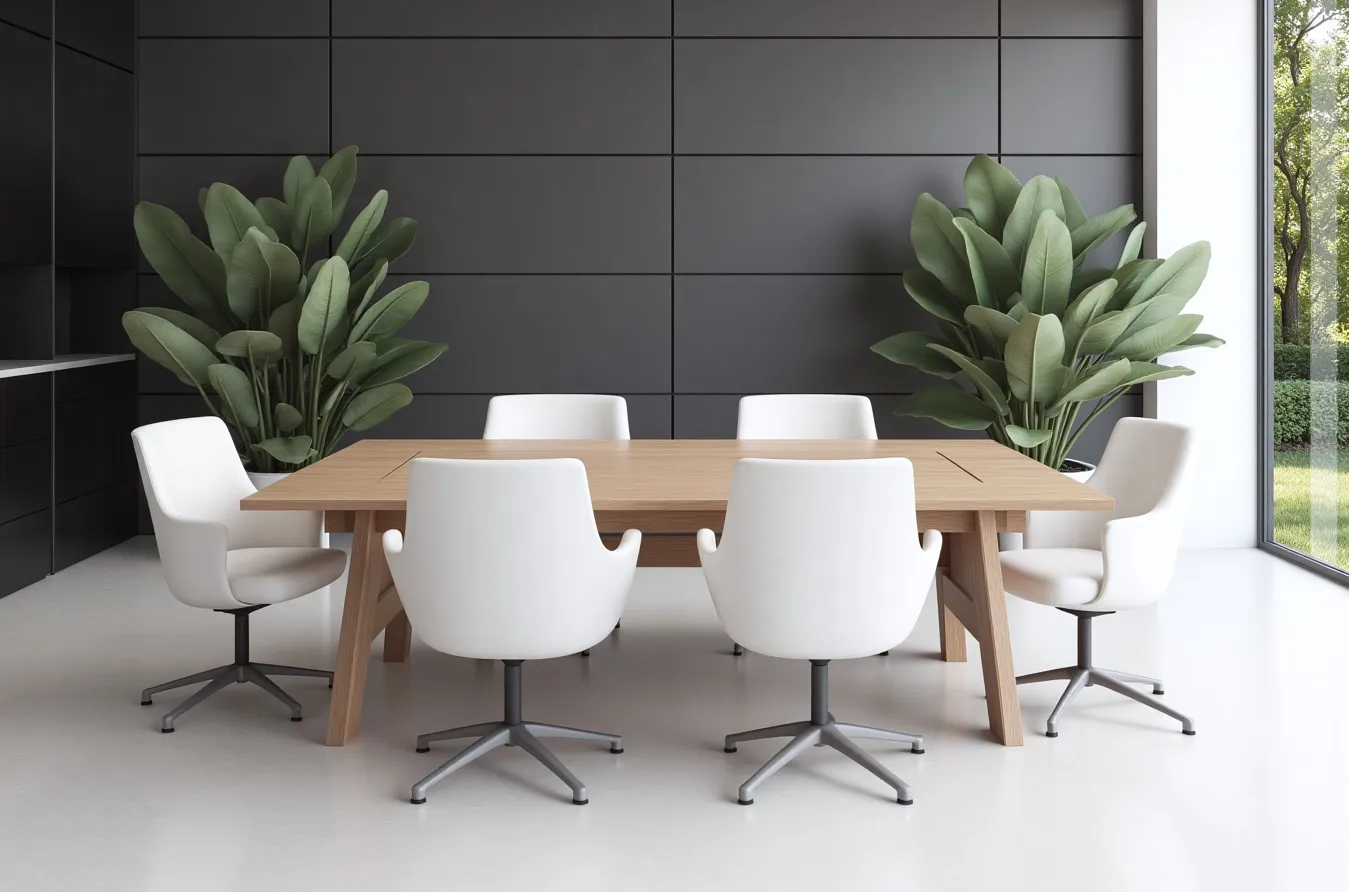
When planning a meeting room, picking the right Conference Room Table and Chairs needs to be a top concern. This key furniture setup shapes the vibe for every client pitch, team chat, and big decision made in that space. A well-chosen table boosts teamwork and comfort while showing your brand’s professionalism. To make the most of your conference area, you’ve got to give some real thought to the materials, shape, and size you go with.
Material Sets the Tone
The material you choose for your conference table does make a difference, affecting how the room looks and how long the table will last. Solid wood gives off a classic, professional vibe that works wonderfully in formal boardrooms or areas where clients visit. On the other hand, laminate and veneer are budget-friendly, have a contemporary look, and are simple to keep clean, which makes them perfect for spaces that get a lot of use. If you go with a glass-top table, it can lend a chic and airy feel to the room, but be aware that you might need to clean it more often because of fingerprints and smudges.
Tables with metal frames or details can add a nice, understated industrial touch if your space has a contemporary vibe. Picking out materials is really about finding that sweet spot between how well it works and how it looks. You want a surface that looks great and can handle everyday wear and tear without letting your design vision down.
Shape Influences Collaboration
Different shapes of tables can affect how people interact and communicate with one another in the meeting. Rectangular tables are the traditional default, creating order, space, and a natural sense of hierarchy. They’re ideal for large areas and long meetings. Oval or circular tables encourage more equal dialogue because there is no “head” spot, so everyone is on the same level as everyone else.
If you want to balance structure and inclusivity, tables shaped like a boat or a racetrack are a great choice. They add a gentle curve while still keeping things professional. These designs help everyone see better and stay more engaged during talks or creative sessions. Remember, the shape of your table is just as important as its size—it impacts how conversations flow and even how people carry themselves.
Size Impacts Functionality
The right conference table needs to match the number of people who’ll be using it and the room size. If it’s too big, it will make the space feel cramped and limit how people move around; if it’s too small, it won’t feel right, won’t give the meeting the sense of importance it needs, and won’t be very practical. A good rule of thumb is to ensure there’s at least 3 feet of open space around the table. This way, everyone can sit comfortably and get to their seats without trouble.
Start by determining how many people you need to fit in the room. If your team is growing or the space has to pull double duty, consider tables that can be extended or come in modular pieces. Picking the right size for the table will make everyone more comfortable and help things run smoother, leading to better meetings and a more polished look for your space.