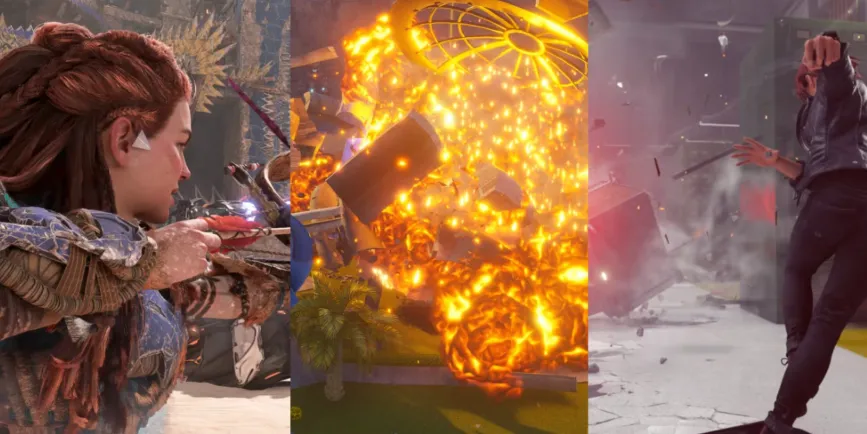
It feels good to watch a wall fall or a building break in a game. It’s safe, fun, and often part of playing. Destruction physics takes that feeling and makes it more believable. It’s not just about making a mess—it’s about making the mess look and feel real, like the live lines in a sports betting odds feed.
What Are Destruction Physics?
Destruction physics is what makes objects break in a game. The game works out how pieces fall, shatter, or explode based on things like gravity and impact. In old games, a barrel exploded the same way every time. With better physics, each explosion can look different.
How Developers Make It Work
Game engines handle destruction in different ways. Some use pre-designed break points—set places where things can crack. Others use real-time physics that allow for more dynamic results. When a player hits a wall, the game checks how hard the hit is, what the wall is made of, and the angle of the hit. Then it breaks the wall in a way that looks real.
The Role of Materials
Not all objects in a game break the same way. Wood splinters. Glass shatters. Metal bends before it breaks. Game makers watch how metal acts in real life to copy it in games. This adds to immersion. You start to believe the world is real because things act the way you expect.
Early Examples in Gaming
Some early shooters, like Red Faction in 2001, made headlines for letting players blow holes through walls. Before that, most game worlds were static—you couldn’t break much. Those early experiments were simple compared to today’s standards, but they showed players how exciting interactive environments could be.
When Physics Changes Gameplay
Destruction isn’t just for looks. It can change how a game plays. In Battlefield, blowing up a wall can expose enemies hiding inside. In Minecraft, removing blocks can give you resources, but also make your structure collapse. This makes players plan carefully. You’re not just shooting—you’re changing the fight.
The Challenge of Realism
Making destruction look real is hard. Too much detail can slow down the game, especially if you’re tracking hundreds of falling pieces. Developers have to balance realism with performance. Sometimes, they simplify the process. Instead of calculating every small piece, the game might group chunks. This keeps it fast but still looks convincing.
Famous Games That Nailed It
- Battlefield series – Large-scale battles with destructible buildings and cover.
- Control – Every fight leaves debris flying across the room.
- Teardown – A sandbox game built entirely around breaking things in creative ways.
- The Legend of Zelda: Breath of the Wild – Not a full destruction system, but clever physics make breaking objects feel natural.
These titles show how destruction can be both a visual treat and a gameplay feature.
The Science Behind the Fun
Physics in games borrows from real-world science. Developers use math to model gravity, tension, and momentum. They study how things fracture under stress. In some studios, engineers even test breaking real objects to see how they behave before recreating them digitally.
Player Creativity and Destruction
Some games give players tools to break things just for fun. Teardown is a good example. There’s no one way to finish a level—you can blow through a wall, dismantle a bridge, or drop something heavy from above. Players try wild ideas just to see what happens.
The Rise of Physics-Driven Indie Games
Indie developers have embraced destruction physics because it’s a great way to stand out. Smaller studios can focus on creating detailed, breakable environments without needing huge open worlds. Games like Besiege and Instruments of Destruction show how physics can be the main attraction.