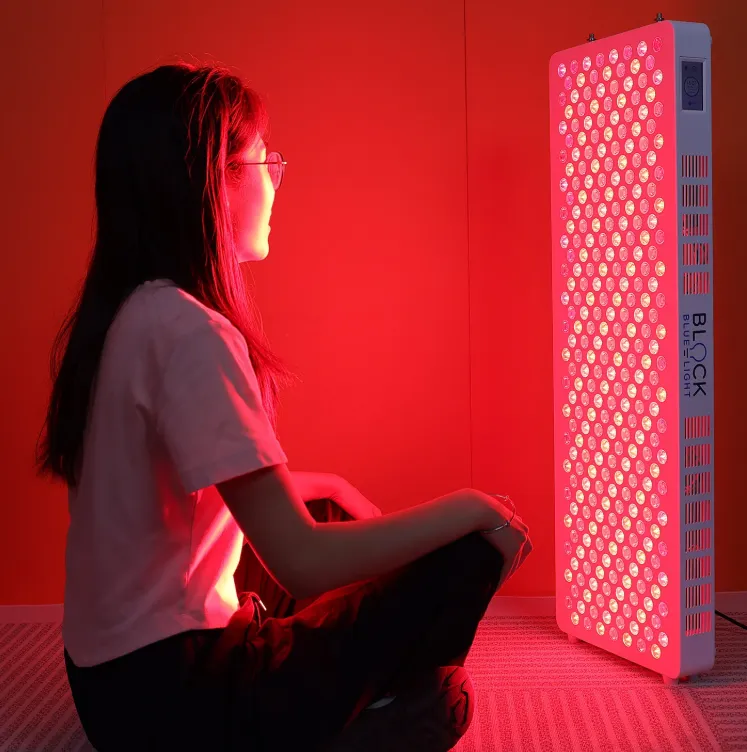
When you bring a powerful light panel into your home, you do not just care about wavelengths and power. You also care about what the device is doing electrically around your body. That is where low EMF design matters.
Modern panels can now deliver clinic level irradiance while keeping magnetic and electric fields at or near background levels at normal treatment distance. In this guide we will look at leading low EMF brands, what wavelengths they use, typical price ranges, and why some models offer a higher percentage of their LEDs in research backed bands.
Most of the brands below were also compared side by side for irradiance, EMF and wavelength design in an independent multi brand analysis of red light therapy panels, which is useful when you want to cross check claims across the market.
What low EMF really means in a red light panel
EMF from a panel mostly comes from the power supply, internal wiring and any wireless radios. Good design keeps these fields very low at the distance where you actually stand, which is usually around six inches or more from the LEDs.
Some brands publish measurements like about zero microtesla at six inches, measured with a gauss meter. Others describe EMF as undetectable at three to six inches or quote specific values that fall into the green or best category under Building Biology standards for magnetic fields at that distance.
If a panel has built in bluetooth or wifi, that adds radio frequency fields on top of the low frequency power fields. Many of the lowest EMF brands simply avoid wireless features entirely, using wired remotes or simple onboard controls instead.
For wavelengths, the goal is to have a very high percentage of LEDs in proven therapeutic ranges such as 630 and 660 nanometres for red and 810, 830 and 850 nanometres for near infrared. Some panels add 480 nanometre blue or deeper near infrared like 940 or 1064 nanometres, but the best designs still keep almost all of their diodes in those functional peaks rather than decorative colours.
RLT Home Total Spectrum series
RLT Home puts low EMF front and centre. Its Total Spectrum panels are tested at roughly zero microtesla at six inches or greater, with lab style screenshots that show about zero point zero four microtesla at three inches dropping to about zero at six inches.
The wavelength mix is unusually rich. Each panel uses seven peaks at 480, 630, 660, 810, 830, 850 and 1064 nanometres, and the LEDs are allocated so that all of those bands have meaningful density rather than one token diode at an exotic wavelength.
Price wise, the small Mini panel usually sits in the mid four hundreds dollars while the tall Elite with motorised stand is often just under four thousand dollars, with Compact and Max models in between. All of them share the same low EMF design and spectrum, so you choose size and budget rather than safety.
Mito Red Light MitoPRO and MitoPRO X
Mito Red Light emphasises EMF minimisation in its documentation and blog. The company states that at six inches and beyond, its panels emit no detectable EMF on common meters and that it deliberately avoids wifi radios to keep emissions down.
The MitoPRO and MitoPRO X series concentrate almost all LEDs into four wavelengths at 630 and 660 nanometres red and 830 and 850 nanometres near infrared, giving a dense spectrum in the most studied bands.
Prices typically range from the mid three hundreds dollars for smaller panels up to roughly one thousand two hundred dollars for tall full body units, with modular stacks costing more if you want complete front and back coverage.
Hooga HG and Ultra series
Hooga has made low EMF a selling point across its HG and Ultra lines. Product pages and manuals describe low EMF output at recommended distances, with independent reviewers and user reports noting essentially zero readings at around six inches on several models.
Most HG panels use dual wavelengths at 660 and 850 nanometres, so one hundred percent of their LEDs sit in proven therapeutic ranges. The Ultra series adds more wavelengths such as 630 and 810 nanometres while still keeping all diodes in red and near infrared bands, which preserves high density.
Smaller Hooga panels can cost well under four hundred dollars, while large HG1500 or Ultra sized units are usually in the mid to high hundreds dollars, making them strong value options for low EMF shoppers.
BlockBlueLight PowerPanel Mega and Pro
BlockBlueLight highlights low EMF and zero flicker across its PowerPanel series. Listings for the Mega and Pro note ultra low EMF that is undetectable even at three inches and describe the panels as flicker free with dedicated circuitry to reduce electrical noise.
Wavelengths include 630 and 660 nanometres red and 810, 830 and 850 nanometres near infrared, with all LEDs in those bands so there is no wasted output on purely cosmetic colours. Irradiance figures around one hundred sixty to one hundred sixty seven milliwatts per square centimetre at six inches show that low EMF does not mean low power.
The PowerPanel Mega is typically priced around one thousand three hundred British pounds, with smaller PowerPanel models and portable units starting in the low hundreds pounds, so there is a range for both home and professional buyers.
Infraredi Flex and Pro panels
Infraredi positions its panels as low EMF devices and explicitly tells customers to look for panels that minimise EMF exposure. Its education pages and product listings stress flicker control and reduced electric and magnetic fields.
The Flex and Pro panels normally use five wavelengths at about 630, 660, 810, 830 and 850 nanometres, and all diodes are within red and near infrared ranges. This keeps wavelength density extremely high across bands that have strong research support.
Prices for mid sized Infraredi units often fall in the mid hundreds dollars or equivalent, while larger Flex Max and Pro Max full body combinations can approach two thousand dollars depending on stands and bundles.
Rouge Pro and Ultimate panels
Rouge takes EMF safety seriously and makes clear statements about its measurements. The company reports that at four inches from its panels, EMF readings stay at zero point zero zero on its test meter, which is unusually low for a large tower.
Rouge panels focus mainly on strong red and near infrared peaks such as 660 and 850 nanometres and in some models additional near infrared bands, with all LEDs dedicated to these therapeutic wavelengths. This focus maximises photon density and simplifies dosing.
The Pro panels often sit just above one thousand dollars, while larger Ultimate and bed packages go into the several thousand dollar range for clinics and biohacking centres.
Rojo Refine series
Rojo explicitly advertises ultra low EMF and ELF cancelling technology. Its documentation mentions less than one milli gauss at three inches and dedicated circuits to keep electric fields low, as well as zero flicker on flagship devices like the Refine 360.
The Refine towers use five main wavelengths at 630 and 660 nanometres red and 810, 830 and 850 nanometres near infrared. Through the touch screen you can control the percentage of each band, which means you get both high density and precise tuning rather than a fixed mix.
Rojo is priced in the upper bracket. Large Refine devices cost several thousand dollars, aimed at athletes, clinics and heavy personal use where ultra low EMF and flexible wavelength control are priorities.
Lightpath LED Diesel series
Lightpath LED openly discusses EMF as a key safety factor in light therapy and designs its Diesel panels to minimise so called electrosmog while still producing strong irradiance. Independent reviews often test its EMF levels and place them among safe low categories at typical distances.
The Diesel XL and related panels offer multi wavelength options, usually combining red and near infrared peaks with optional blue. The Diesel Torch handheld device, for example, uses four wavelengths chosen to maximise depth and absorption for both humans and animals.
Pricing for Diesel panels ranges from around five hundred dollars for tabletop units to just under two thousand dollars for an XL tower, placing Lightpath LED in the upper mid market for high performance low EMF devices.
Red Light Rising Advantage series
Red Light Rising is often highlighted as a strong low EMF option in independent device roundups. The Advantage panels are designed so that magnetic fields at common treatment distances stay in the lowest target zones while still delivering strong irradiance.
Most Advantage panels use a five wavelength mix of 630 and 660 nanometres red and 810, 830 and 850 nanometres near infrared. As with other top tier brands, essentially all of the LEDs are in these peaks, so the ratio of useful to decorative output is extremely high.
The Advantage 900 typically sells for a little over one thousand British pounds, with smaller and larger options bracketing that price for different coverage needs.
PlatinumLED BioMax series
PlatinumLEDs BioMax range combines high power, multiple wavelengths and low EMF engineering. The company notes that BioMax panels are designed to keep EMF exposure minimal at normal use distances while maintaining high irradiance.
The BioMax spectrum uses seven wavelengths around 480, 630, 660, 810, 830, 850 and around 1060 nanometres, with all diodes devoted to red, near infrared and short wave infrared. That gives broad tissue coverage without sacrificing density in each band.
Prices start in the mid four hundreds dollars for smaller BioMax units and go up to around one thousand three hundred dollars for the large 900 panel before stands or discounts.
Vital Red Light
Vital Red Light is frequently grouped with other premium low EMF brands in expert roundups. Product descriptions emphasise medical grade build quality with attention to electrical safety.
The Vital Pro and larger panels generally use dual wavelengths at 660 and 850 nanometres, meaning that every LED is an active therapeutic diode. That tight focus produces a very high percentage density in those bands, which suits users who mainly target skin, muscle and mood without needing exotic wavelengths.
Smaller Vital devices cost a few hundred dollars, while tall professional towers for clinics and high end home gyms can run into the low thousands.
Boncharge
Boncharge panels, particularly the Max and Super Max, are described by reviewers as medical grade devices with low EMF output and heavy focus on build quality.
They usually use two main wavelengths at 660 and 850 nanometres. This simple but efficient spectrum means that essentially one hundred percent of the LEDs contribute to therapeutic output, giving a very dense dose per minute.
The Super Max often sells for around one thousand three hundred British pounds, while smaller Boncharge panels are available in the mid hundreds range.
Joovv
Joovv has long marketed itself as a premium light therapy brand and invests in EMF and safety testing. Its panels are widely treated as low EMF devices in third party comparisons, even though some newer competitors now publish more detailed numbers.
Joovv panels typically use 660 and 850 nanometres, allocating all their LEDs to these two peaks, so wavelength density is very high even though the spectrum itself is simple. Users who want straightforward red and near infrared without extra colours often appreciate that focus.
A Solo sized Joovv full body unit usually costs around one thousand seven hundred dollars, with modular setups increasing total price as you add panels.
Red Therapy Co
Red Therapy Co’s RedRush panels are often cited as low EMF options and are built with simple, wired controls rather than wireless radios.
The spectrum is dual wavelength at 660 and 850 nanometres, and all LEDs are split between those two peaks. This keeps photon density high in exactly the bands most frequently used in musculoskeletal and skin studies.
Large RedRush panels fall into the mid hundreds to low thousands dollars, depending on configuration and promotions.
Bestqool
Bestqool is a value brand that still pays attention to basic EMF design. Expert roundups list its panels among decent low EMF options for budget shoppers, especially smaller and mid sized units.
Like several competitors, Bestqool generally uses 660 and 850 nanometres as its two wavelengths and dedicates all LEDs to them. This keeps the spectrum focused and dosing simple for everyday home use.
Full body oriented Bestqool panels can start in the low three hundreds dollars, making them accessible first devices for people who want low EMF without premium branding.
Sunlighten
Sunlighten is best known for low EMF infrared saunas, and that focus carries over into its red light offerings. Its heating cabins are engineered for low EMF and ELF levels, and the red light panel accessory follows the same philosophy.
The panel uses multiple red and near infrared wavelengths within the usual therapeutic ranges, with all LEDs allocated to those peaks rather than decorative blues or greens. That design makes it attractive to sauna owners who want to add low EMF light therapy rather than a separate panel.
As a premium sauna accessory, the red light panel is priced in the higher range, especially when bundled with a cabin, but it brings together two low EMF modalities in one setup.
Celluma
Celluma flexible LED panels are widely used in clinics and are listed as cleared light therapy devices for several indications. Their design inherently keeps magnetic fields low at the skin because the LEDs are driven at modest currents, and there are no wireless radios embedded in the pad.
Different models blend multiple wavelengths for acne, pain or anti ageing, but each device still concentrates its LEDs in narrow red and near infrared bands rather than a broad rainbow of colours, so functional wavelength density remains high.
Most Celluma panels cost in the mid to upper four hundreds dollars for home versions and higher for multi mode professional units.
Putting it all together
Across these brands a few patterns stand out
- The best low EMF panels publish or at least discuss EMF measurements at realistic distances, commonly aiming for readings that are at or near background levels at around six inches.
- Devices that avoid built in wifi and bluetooth can keep radio frequency exposure close to zero, relying instead on simple wired controls.
- The strongest designs devote nearly all of their LEDs to red and near infrared peaks between about 630 and 850 nanometres, sometimes with a few additional wavelengths like 480 or 1064 nanometres, but never wasting power on purely decorative colours.
If you want a very low EMF panel with rich wavelength coverage and high density, options like RLT Home Total Spectrum, BlockBlueLight PowerPanel, Rojo Refine, Rouge and Lightpath LED sit near the top of current comparisons. If you prefer a simpler dual wavelength spectrum and lower price while still keeping EMF minimal, brands like Mito Red Light, Hooga, Vital Red Light, Boncharge, Red Therapy Co and Bestqool offer strong value.
As always, red and near infrared light therapy is generally considered low risk for most healthy adults, but it is not a substitute for professional care. If you have implants, serious heart conditions, active cancer, pregnancy, epilepsy or eye disease, discuss any home device with your clinician before starting a new routine.