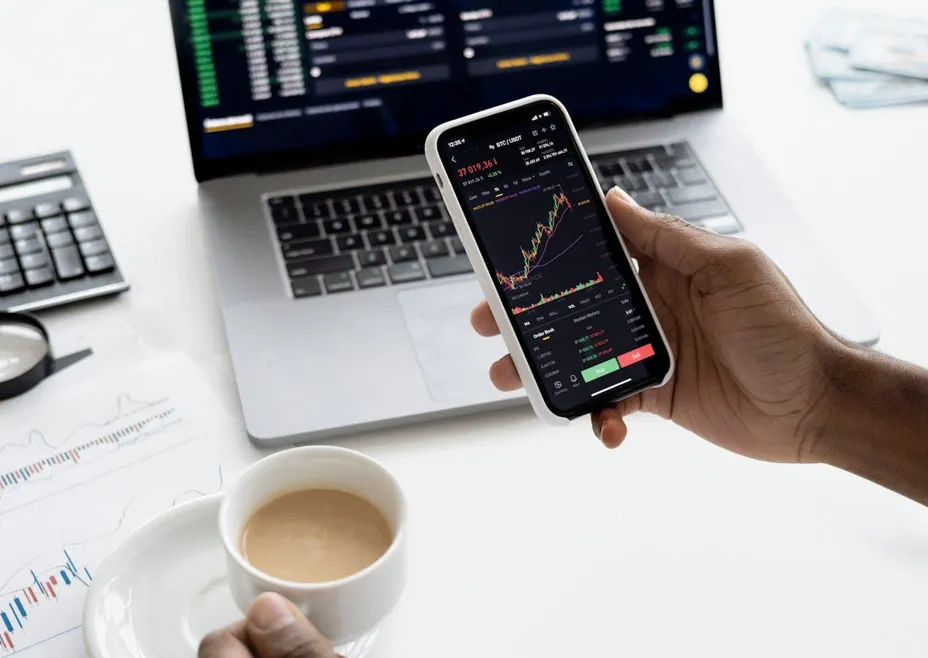
If you want extra income that fits around your day job, you’ve probably come across forex trading and are now wondering whether and how to start. Well, first, let us encourage you to indeed start, and soon. If you can find a way to treat forex trading like a disciplined small business and not a get-rich-quick scheme (because it’s not that, no matter what some bloggers may say), it’s almost guaranteed you’ll make good, maybe even great money.
Forex trading doesn’t require a lot of startup capital and it runs 24 hours a day, so it’s both accessible and flexible – you can trade before work, during lunch, or after dinner. That freedom is why millions now treat forex as their secondary income stream, and you can, too.
But you’ll need a clear plan for learning, testing, managing risk, and choosing the right broker before you click “Buy.”
Start With The Right Foundation: Learn, Then Trade
Before you do anything at all, you want to learn the mechanics. So, things like currency pairs, pip math, margin, and position sizing, to start with. To do this, use focused micro-courses or concise books that emphasize practical drills like how to calculate position size, how to read a two-bar reversal, where to set stop-loss, etc.
Then, practice on a demo account until your rules survive real-time market moves, not just backtests. Simulation is incredibly valuable because it helps you master order execution, test strategies under real-time conditions, and collect data on your performance before real money’s on the line. It also teaches you emotional control: how you react when a trade goes against you. The goal is to get into this with deliberate preparation, not blind optimism.
Set Firm Risk Limits
Decide a per-trade risk limit and a weekly loss limit before you open a live account. A common approach: risk 0.5–1% of account equity per trade. And use a daily session stop if you’re trading after work; once you hit that limit, you log results and stop.
This will turn trading into a predictable routine rather than a late-night roulette. Risk rules also keep a side hustle sustainable.
Choose A Regulated Platform And The Right Account Type
Pick an online forex broker with clear regulation and good execution. Axi, for example, operates under major regulators in several jurisdictions and offers both standard and raw spreads accounts, which can be more or less useful depending on your strategy and cost sensitivity. If you plan to scalp or run many small trades, a raw-spread account plus commission often beats wide markups.
Always confirm which entity will hold your client money and which regulator applies to your residency.
Practice On Demo, Then Scale Gradually
Demo accounts let you test execution, time-of-day effects, and overnight swap costs without emotional capital. Once live, start with a small fraction of the size you simulated. Increase exposure only after at least 20 consistent, rule-based winning weeks (not streaks from luck).
Understand Leverage And Spreads
Leverage multiplies profits and losses. In regulated regions, retail leverage for major FX pairs commonly caps around 30:1. That’s high enough to be tempting but low enough to limit catastrophic losses if you set sensible stops.
Know your broker’s offered leverage and what that means for margin calls. Spreads are your per-trade cost: tighter spreads reduce the break-even distance for a strategy; variable spreads widen in volatility. Track average spreads for your chosen pairs; that cost eats into returns on short timeframes especially.
Schedule Workable Trading Sessions
Again, it’s best to treat forex trading like a side job. This means assigning fixed slots (e.g., 7–8am and 8–9pm) to do this that don’t collide with your main work or social and romantic life. Use those hours for analysis, placing orders, and trade review.
If you trade news, mark the calendar for high-impact events and either reduce exposure or widen stops temporarily. Consistent timing is key because it’s what reduces fatigue and decision drift.
Watch Out For Common Pitfalls
High leverage without stop discipline, chasing losses, overtrading after a winning streak, and trading in low-liquidity hours are predictable traps. Also be wary of brokers in lightly regulated jurisdictions offering extreme leverage (1:200–1:500). The math looks attractive until a moderate market move erases your account. Keep capital you can afford to lose and keep records: your P&L, strategy notes, and a trade journal are non-negotiable.
Tools And Metrics To Track
Monitor the following things:
- Win rate,
- Average win/loss,
- Expectancy (average win × win rate − average loss × loss rate),
- Maximum drawdown,
- Sharpe-type ratios for longer runs.
Use these to decide whether to scale a strategy, tweak parameters, or stop. The goal is to have small, repetable edges. You’ll never have a perfect system, so don’t waste your time chasing it. Instead, focus on the process itself.