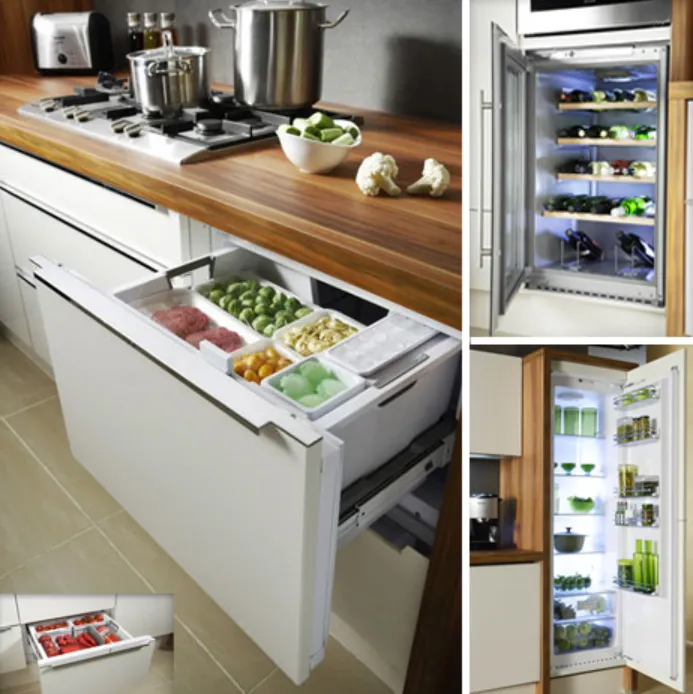
When your kitchen’s trying to do five jobs at once and floor space is basically currency, an integrated underbench fridge makes sense in ways that freestanding models just don’t. These units slide under standard countertop height—usually 850-900mm—and blend into your cabinetry instead of sticking out like that old bar fridge in the garage. The technical advantage isn’t just aesthetics though. They’re designed with front ventilation systems that pull cool air from the bottom and exhaust heat through the front grille, which means you can actually box them in without worrying about overheating and compressor failure like you would with regular fridges that need clearance on all sides.
How the Cooling System Differs
Standard fridges use rear-mounted compressors and need air circulation space behind and on the sides. Jam them into a tight spot and the compressor works harder, runs hotter, uses more power, and dies younger. Underbench models relocate the compressor and condenser coils to accommodate built-in installation.
They use forced-air or fan-assisted cooling that actively circulates cold air instead of relying on natural convection. The evaporator—that’s the part that actually creates the cold—sits at the back or top with a fan pushing air across it and throughout the compartment. This creates more even temperature distribution. You don’t get that thing where the back of the fridge freezes your lettuce while the door shelves barely stay cold.
Most quality units maintain temperatures between 2-4°C pretty consistently, which is the sweet spot for food safety. Below 2°C and you risk freezing fresh produce. Above 4°C and bacterial growth accelerates. Temperature stability matters more than you’d think for food quality and longevity.
Installation Requirements People Forget About
You need proper ventilation even though these are designed for enclosed spaces. That front grille isn’t decorative. It needs clearance—usually at least 100-200mm of space at the base for air intake. Block that and you’re back to the overheating problem you were trying to avoid.
Electrical outlets need to be accessible without pulling the entire unit out. Most installations put the outlet in the adjacent cabinet with a small hole drilled through. Running extension cords behind built-in appliances is asking for trouble and probably violates electrical codes.
The cabinet opening needs to be exact. Too tight and you can’t fit the fridge, too loose and you’ve got gaps that look terrible. Standard widths are 450mm, 600mm, and 900mm. Measure your space three times before ordering.
Energy Efficiency Considerations
Underbench fridges typically range from 100-200 litres capacity and use 150-300kWh annually depending on size and efficiency rating. Compare that to full-size fridges using 300-500kWh per year. Smaller volume means less energy to cool, but the ratio isn’t linear because you still need to run the compressor.
Look for models with inverter compressors. These adjust their speed based on cooling demand instead of cycling on and off at full power. It’s more efficient and quieter. Traditional compressors are either running at 100% or off, which wastes energy when you only need a little bit of cooling.
LED lighting uses about 90% less power than old incandescent bulbs and produces almost no heat, which means the cooling system isn’t fighting against the light bulbs.
Energy star ratings in Australia go from 1 to 6 stars, sometimes up to 10 with super-efficient models. Each star represents about 20-25% better efficiency than the previous rating. A 4-star rated fridge will cost roughly half as much to run as a 2-star model of similar size.
When This Type Actually Makes Sense
Small apartments or studios where every centimeter counts. You’re not hosting dinner parties for twelve people, you need basics chilled without sacrificing your entire kitchen.
Secondary fridges for drinks, wine, or specific food items. Having beer and wine at the right temperature without opening the main fridge constantly helps that appliance run more efficiently too.
Home bars or entertainment areas. Built-in fridges look cleaner than a random bar fridge sitting on the floor.
Outdoor kitchens need fridges rated for outdoor use specifically, but underbench models designed for weather resistance work well here. They’re built to handle higher ambient temperatures and humidity.
Office kitchens where space is limited and you don’t need full-size cold storage.
Common Problems and Fixes
Door seal wear is probably the biggest issue. The gasket around the door needs to maintain constant pressure when closed. Test it by closing the door on a piece of paper—if you can pull the paper out easily, the seal’s shot. Replacing door seals is usually DIY-friendly and costs $50-100.
Frost buildup happens even in frost-free models if the defrost system fails. That’s typically the defrost heater, timer, or thermostat malfunctioning. These parts are cheap but diagnosis can be tricky without a multimeter.
Noise from the compressor or fan is normal to a degree, but if it suddenly gets louder, something’s wrong. Could be the condenser fan dying, could be the compressor itself wearing out.
Temperature fluctuations usually mean either the door’s been left open too long, the seal is bad, or the thermostat’s failing. Check the simple stuff first before calling for service.
Maintenance That Extends Lifespan
Clean the front grille every few months. Dust and debris block airflow, making the compressor work harder. Just vacuum it off or wipe with a damp cloth.
Keep the interior clean. Spills create bacteria growth and weird smells that activated charcoal filters can only do so much about.
Don’t overload it. Air needs to circulate inside. Packing it completely full prevents proper cooling and makes the compressor run continuously.